Innovative fatigue monitoring system
Basic project details
- Implementation period: 1st January 2025 – 31st December 2025
- Project partners: IHF Digital Ltd, Edinburgh Trams, DKV Debreceni Közlekedési Zrt.
- Lead partner: Edinburgh Napier University (ENU)
- Project leader: Professor Pat Langdon
- Funded by EIT Urban Mobility, an initiative of the European Institute of Innovation and Technology (EIT), a body of the European Union.

Purpose
The aim of the project is to test a system, that can predict and prevent the onset of human error (fatigue, inattention, incapacitation, illness), before it’s commercialised.
Implementation
IHF DIGITAL Ltd has developed a lightweight, unobtrusive wearable system (smartwatch and hub) that collects biometric data of transport drivers and perform predictive analytics that detects error producing conditions and prevent fatigue related incidents. Biometric data from the user is sent to the hub via Bluetooth. The hub will semi process some of the data before sending securely to the Cloud, where some machine learning takes place. Any physiological and statistical deviation from the users’ norm (which has been pre-tested on an individual basis) will flag a Red/Amber alert to both the user and a control room to take action, based on company protocol.
Partners’ main contributions:
- IHF Digital provides devices, and training
- ENU will provide project management structure to ensure a successful project delivery, through their Transport Research Institute (TRI).
- Edinburgh Trams
- DKV provides the second pilot location rolling out the device & technology.
Debrecen’s pilot project
DKV’s role within the project will be to provide access, to train & onboard 30-50 volunteers of a various mix (tram, bus, trolleybus drivers, operators) and deploy the technology in real live environment. During the pilot phase DKV will help the consortium by collecting feedback, aid the conduction of interviews and surveys, give feedback on the system’s accuracy.
Project status
JANUARY
Getting familiar with project scope and tasks.
Preparation for recruitment → collected 48 test users
FEBRUARY
Preparation for device testing period
- Translating user manual
- Creating and sharing public communication materials (LinkedIn, Facebook)
- Creating and sharing internal communication materials (DKV intranet)
MARCH
Visit to EIT UM Partners day, Munich (18th-19th March)
- Baseline NC posters session representing the consortium
APRIL
IHF visit in Debrecen, 30thApril
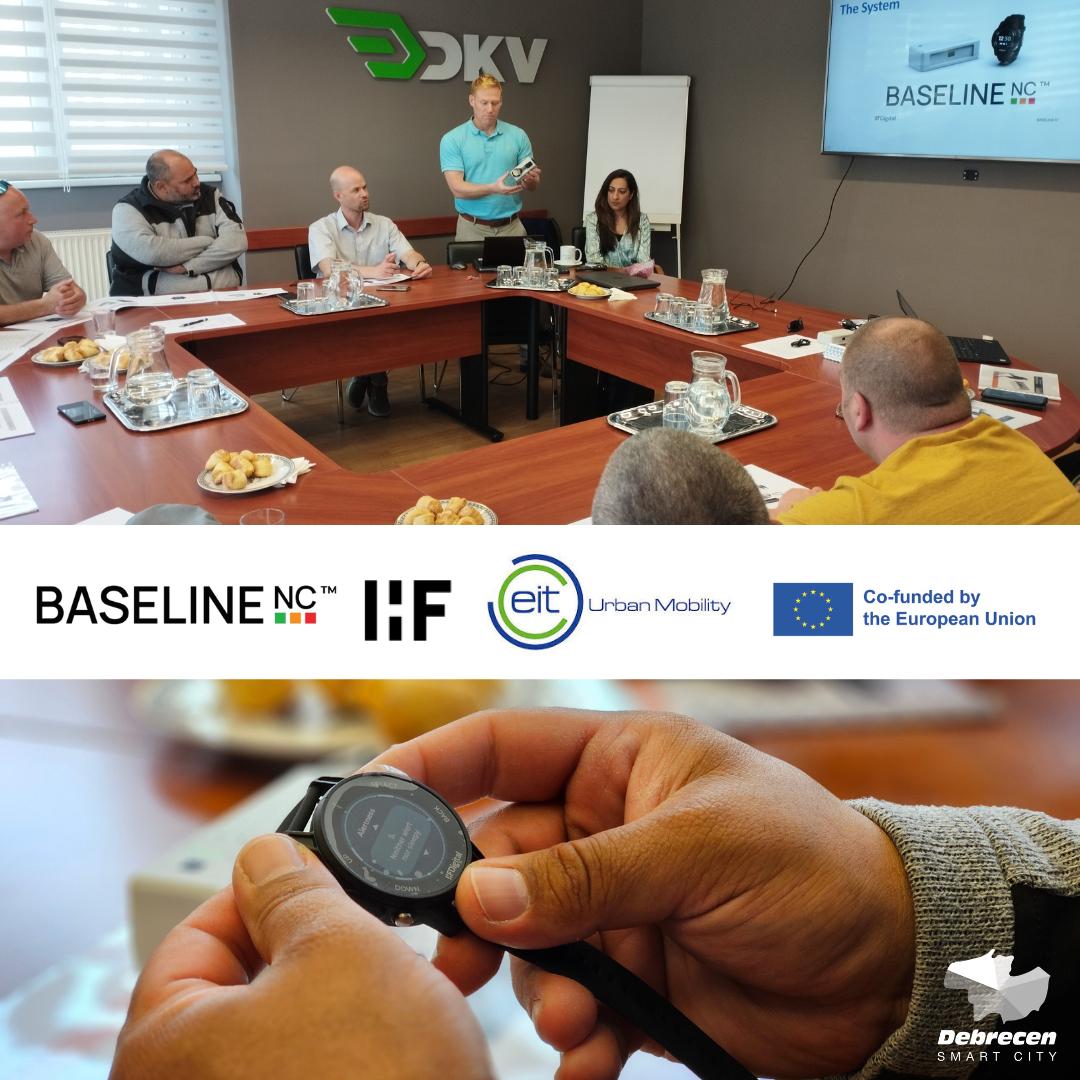
- Training for drivers and traffic control staff
- Handing devices to test users (20+1 users)
- Beginning device testing on all vehicle types and at traffic control
MAY
Learning and verification period of test devices
- Supervision of test drivers
- Trouble shooting, providing technical support for drivers
- Dashboard training for pm
- Solving cellular usage and network coverage issues
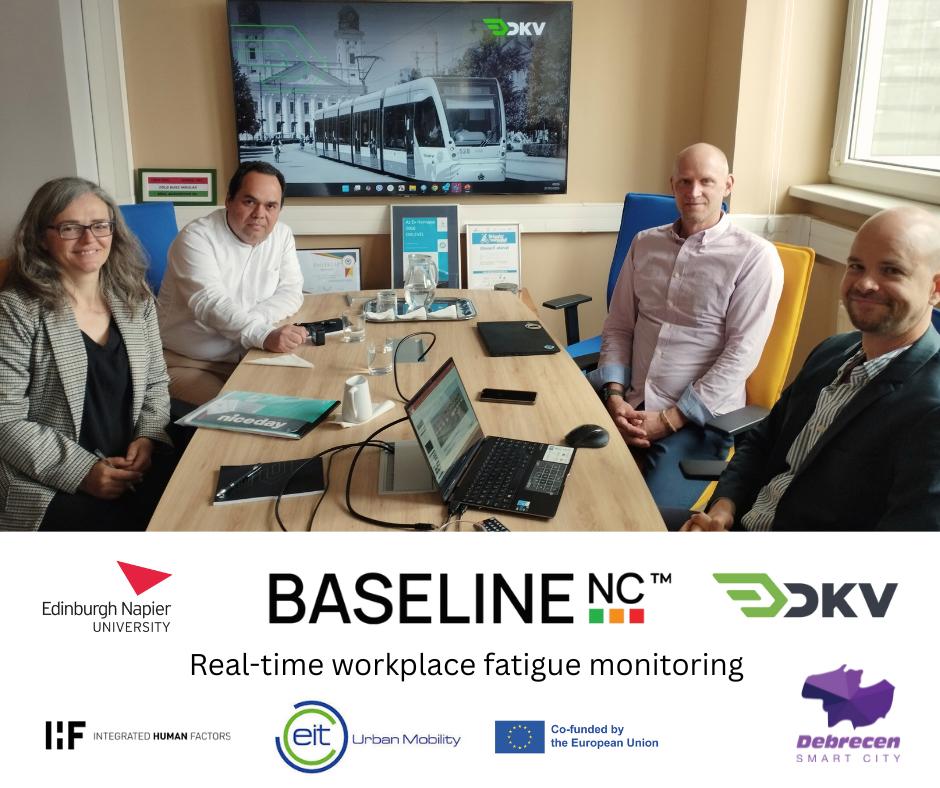
ENU visit in Debrecen
- Pilot interviews with drivers and traffic control staff
- Introduction to DKV public transport services
Trial reports started
- IHF report
JUNE
Live alert stage of test devices started
- Trouble shooting, providing technical support for drivers
- Dashboard training for traffic control staff
- Dashboard updates, improvements
Video clip created for promotion purposes
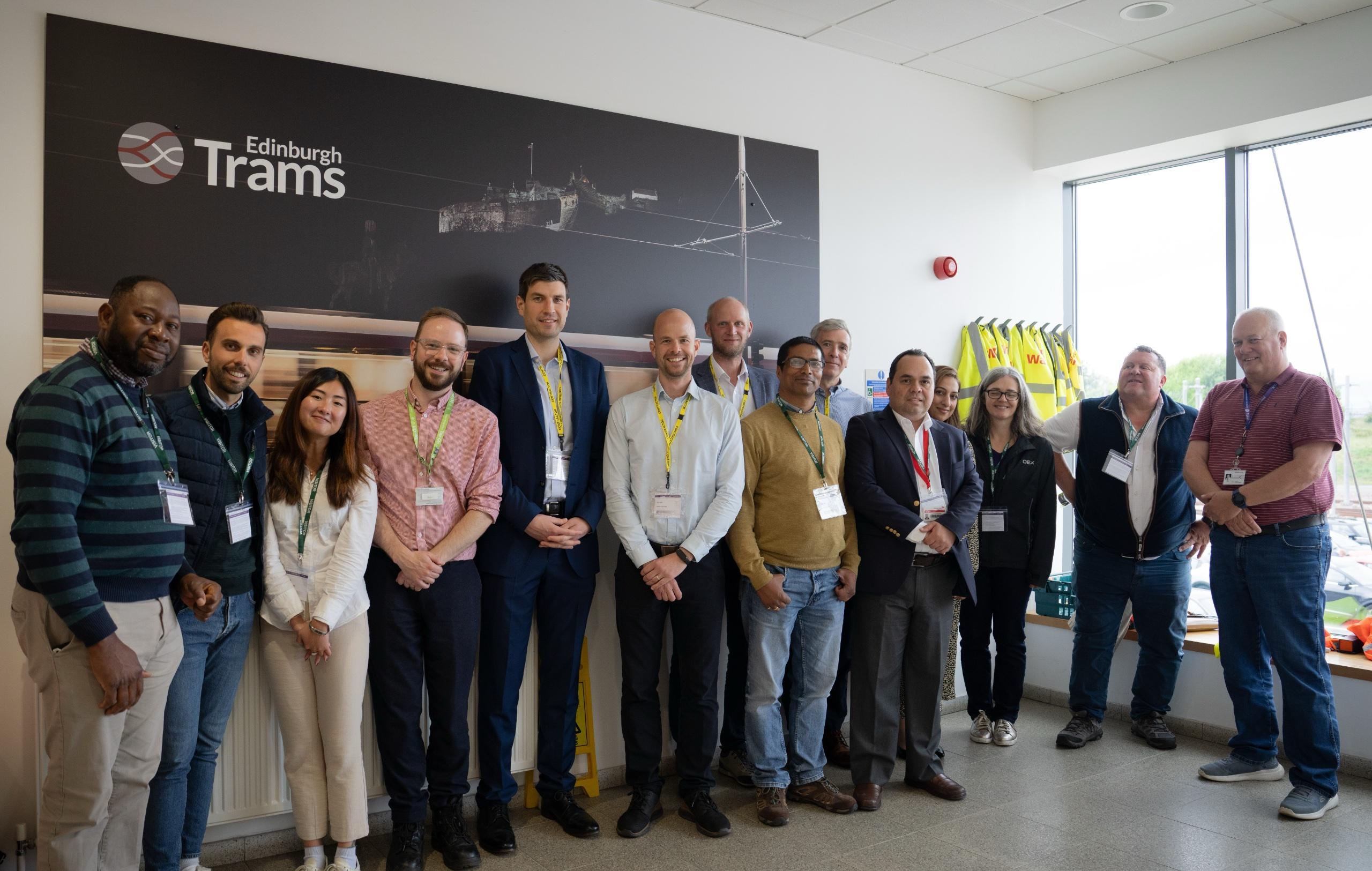
Edinburgh Tram study visit, Edinburgh, 23-24 June
Public and internal communication ongoing
Project promotional video clip: https://www.youtube.com/watch?v=xZTMGf8ArYM
JULY–OCTOBER
Testing of the system in a real-world environment continued. We held regular online consultations with representatives of IHF, during which, in addition to discussing technological observations and challenges, we also analyzed the alert analytics. The online interfaces required for registering alerts were completed. With the support of the traffic operations team, the Alert Action Plan – Process Flowchart was also developed. This document precisely defines the sequence of recommended actions for each type of alert.
NOVEMBER
As a Leading City partner, we had the opportunity to share our experiences gained during the project with a professional audience at one of the world's most significant smart city conferences, the Tomorrow Mobility World Congress 2025 in Barcelona. Our director of innovation and service development participated in a panel discussion on the topic of Safer Mobility – Road Safety.
During the month, with the deeper involvement of the IHF Ltd consultant and the traffic operations department of DKV Zrt., the document entitled Recommended Operational Directive for DKV Zrt. was finalized. This document was prepared as a set of recommendations for the event that DKV Zrt. chooses to continue paying special attention in the future to monitoring the alertness of employees working in positions associated with critical safety risks.
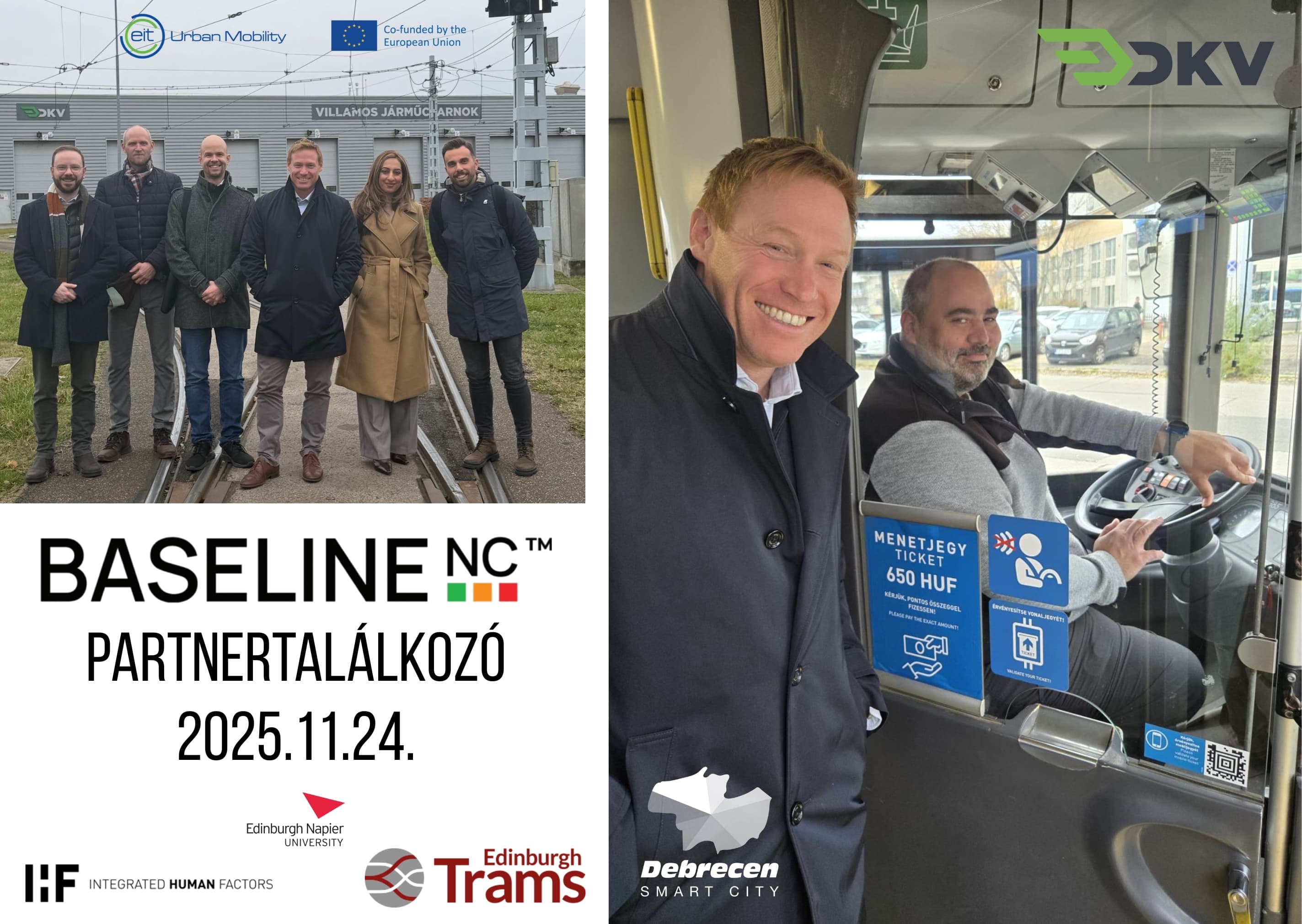
At the end of the month, we once again hosted the members of the Baseline NC consortium. This international partner meeting was also the project's final in-person gathering. Before the pilot concluded, we reviewed the project's achievements in person together with our Scottish colleagues. It was a particular honor to welcome Alex Bojeri, representative of EIT Urban Mobility and the project officer responsible for the initiative, who also observed the tested devices in practical operation. Both the consortium partners and the EIT Urban Mobility representative expressed satisfaction with the implementation of the project.
DECEMBER
The finalization of the project documentation and all required deliverables related to the grant was completed.